
Full-time Master’s Degree Programme (2 years)
| About the programme Language: English (See language requirements) | Place of study: Aarhus | Commencement: August / September (no winter intake) | Programme type: Full-time Master’s Degree Programme (2 years) |
Every product on a shop shelf, component in a factory or parcel delivered to a customer depends on a network of suppliers, production facilities, warehouses and transportation systems. These networks must operate efficiently and reliably while adapting to changing demand, disruptions and increasing expectations for sustainability.
Operations and Supply Chain Analytics is about understanding these complex systems and using data and quantitative methods to improve them. The programme takes an analytical and application-oriented approach to supply chain management, focusing on:
Performance measurement and the need to balance several, potentially conflicting KPIs are recurring themes throughout the programme.
During the programme, you may work with questions such as:
You begin by developing a solid foundation in supply-chain management, data analysis, forecasting and decision modelling. You learn basic programming and use modern analytical software to work with data, build models and evaluate alternative solutions. Programming is taught as a practical problem-solving tool rather than as an end in itself.
You then apply these methods to concrete challenges within procurement, inventory management, production, distribution and transportation. Optimisation helps identify promising decisions, while simulation can be used to test whether proposed solutions remain effective under uncertainty and changing conditions.
Through cases and applied projects, you learn to deal with incomplete data, ambiguous problems, real-world constraints and stakeholders with different priorities. You develop the ability to choose an appropriate analytical approach, validate your models, interpret the results and communicate clear recommendations to both technical and non-technical decision-makers. This prepares you to contribute to operational improvements as well as strategic decisions about how future supply chains should be designed and managed.
In this section you can learn more about the admission requirements relevant to the master's degree programme in Operations and Supply Chain Analytics. Depending on your educational background and your qualifications, there are different ways to meet the admission requirements:
This section is relevant for you, if you have:
The two sections listed below are relevant only for students with a bachelor's degree from a Danish institution:
Below these sections, you can learn more about the English language requirement. You can also find out which ranking criteria we use to assess your application when prioritizing among the submitted applications.
If you have an international educational background, you must meet both the general admission requirement and the specific admission requirements:
You must have a bachelor's degree or equivalent that is comparable to a Danish bachelor's degree in both level and duration (180 ECTS).
For more information about how your bachelor's degree is assessed, please see the national database.
If you meet the general admission requirement, the university will continue on to assess whether or not you meet the specific admission requirements.
You can be admitted to the master's programme if the university assesses that your education has a level, scope, and content that corresponds to the academic requirements specified below.
| Subject area | Number of ECTS |
Methods The following subject areas must be covered:
| 15 |
| Marketing | 7,5 |
| Finance | 7,5 |
| Accounting | 7,5 |
| Organisation and leadership theory | 7,5 |
| Microeconomics | 5 |
| Operations management | 5 |
| Additional ECTS points within the abovementioned areas | 25 |
| Total | 80 |
| Applicants with a Bachelor’s degree in Business Administration and Commercial Law (HA (jur.)) with commencement of study September 2014 or later from Aarhus University must have passed a total of 10 ECTS within the business economics subjects below: |
|
Certain Professional Bachelor's degrees or similar covering specific subject areas from other Danish institutions have been determined to fullfill the admission requirements to this master's degree programme:
| Required subject areas – Professional Bachelor’s degree in Financial Management and Service from Business Academy Aarhus |
Industry specialisation in Accounting (“Programme specialisation subject A – external accounts” and “Study programme subject B – strategic accounting”) With the following electives:
|
Industry specialisation in Finansielle forretninger (this industry specialisation is only offered in Danish) With the following electives:
|
| Required subject areas - AP degree in Marketing Management in combination with a Professional Bachelor’s degree in International Sales and Marketing from Business Academy Aarhus | Number of ECTS |
| BSS module (including Methods 5 ECTS, Finance 5 ECTS, and Operations Management 5 ECTS) |
For applicants who hold one of the abovementioned professional bachelor's degrees from another business academy, it will be assessed whether the electives correspond to abovementioned electives.
For applicants who hold another professional bachelor's degree, the degree will be assessed according to the requirements described in the section “International and other qualifications”.
We cannot assess in advance whether your specific degree will meet the above requirements. Therefore, we recommend that you apply for the programme if you believe that you meet the academic requirements. In this regard, it is a good idea to compare your degree with the programmes that provide direct admission.
The following Bachelor's degree programme(s) from Aarhus University entitles you to an offer of admission to the Master's degree programme in Operations and Supply Chain Analytics:
Please note that you must apply for admission to the Master's degree programme within three years of completing your Bachelor's degree programme.
Learn more about Legal right of admission.
Certain Bachelor's degree programmes from Aarhus University and various other Danish Universities have been determined to meet the admission requirements to this Master's degree programme in Operations and Supply Chain Analytics:
* With a diploma older than 2010, your Bachelor’s degree will be assessed according to the specific admission requirements described under the section: “International and other qualifications”.
If you hold a Bachelor’s degree from a non-Danish university, you must complete the appendix below and upload it to the application portal. The appendix helps the academic assessors with the assessment of your application.
Download appendix
All Master’s degree programmes at Aarhus University have limited intake. This means that you are not guaranteed admission even if you meet the entry requirements. When we prioritize among applicants, we assess your application based on a set of fixed ranking criteria, which you can see below.
If you have a legal right of admission, you are guaranteed a place in the programme and do not need to consider the ranking criteria.
Ranking criteria:
* The relevant subject fields are evaluated based on the following point system: 1 point per additional ECTS within the relevant field. You can earn a maximum of 15 points in this criterion. Example: If you have 10 ECTS in a relevant field where the requirement is 7.5 ECTS, you will receive 2.5 points.
Please note that grades achieved after the application deadline are not included in the assessment.
In order to be admitted to this programme you must meet the university's English language requirements.
Students with bachelor's degree from Aarhus University with a so-called 'Legal right of admission' are exempt from the English language requirement.
Unfortunately, Aarhus University is not able to assess your qualifications beforehand. In order for your qualifications to be assessed you must apply for admission. To learn more, please go to Assessment of your qualifications.
Below is an outline of the course:
The study programme consists of two semesters in the first year which cover the compulsory courses in the programme specialisation and two semesters in the last year which are reserved for the student's own specialisation.
In the first semester you follow the prerequisite courses that form the methodological and academic basis for the further study programme.
In the second semester you follow the specialisation courses of the programme.
In the third semester you can choose elective courses within your areas of interest. The courses can either be taken at Aarhus BSS during the semester, at the Summer University or at one of our more than 300 partner universities abroad. You can also participate in project-based internship programmes either in Denmark or abroad.
The fourth semester is devoted to the final thesis. You may choose the topic of the thesis freely and so get a chance to concentrate on and specialise in a specific field of interest. The thesis may be written in collaboration with another student or it may be the result of your individual effort.
Contact Sune Lauth Gadegaard (sgadegaard@econ.au.dk) if you have questions about the track or the individual courses.
Starting from 2028, it is planned that the MSc in Economics and Business Administration (cand. merc.) will be offered as both a 1-year and a 2-year Master's degree programme.
If you have a legal right of admission to this programme because you have a specific bachelor's degree from Aarhus University, we expect that your right of admission will apply to the 1-year programme.
When we know more about the new structure, we will provide updates on this page.
Teaching on the Operations and Supply Chain Analytics (OSCA) programme is practical and varied. Lectures are combined with exercises, discussions, cases, games and hands-on problem-solving. You work both individually and in groups to translate theories and analytical methods into solutions to concrete challenges in operations and supply chain management.
The courses are closely connected, allowing you to apply knowledge and tools from one part of the programme in others. Through shared cases and applied projects, you gain experience with the entire process from structuring a complex problem and selecting an appropriate analytical method to developing and validating a model and presenting the results. In the applied project, you work in a small group while also developing your skills in collaboration, report writing and oral communication.
Student life also extends beyond the classroom. At the recurring “OSCA day”, students, lecturers, alumni and representatives from industry meet for presentations, professional discussions and networking. Here, you gain insight into current supply chain challenges and have the opportunity to connect with potential employers and collaborators.
The student organisation SULOs helps create a strong academic and social community among OSCA students. Through events and networking activities, SULOs builds connections between students, alumni and industry. The network also provides opportunities to share relevant job openings, events and experiences.
Aarhus BSS (School of Business and Social Sciences) is one of Aarhus University’s four faculties. With approximately 13,000 full-time students, several thousand part-time students, more than two hundred PhD students and nearly six hundred faculty members, Aarhus BSS ranks among the largest business schools in Europe and is Denmark’s biggest business and social sciences unit at university level. Building on its broad academic base, it encompasses both traditional business and social science disciplines. Aarhus BSS holds the distinguished AACSB, AMBA and EQUIS accreditations and is thus a triple-crown business school.
At Aarhus BSS, we conduct research and teaching at the highest academic level. We are dedicated to imparting to our students exactly the knowledge, skills, and experience that are in demand – the skills that are essential for engaging in professional business activities in a global marketplace.
Our broad scope enables us to attract researchers, lecturers, and students from all over the world. With their help, we have built an international environment in which academic and cultural views are exchanged, experiences gathered, and friendships formed.
Our students are encouraged to take a semester abroad at one of Aarhus BSS’s approximately three hundred partner universities around the world. Studying abroad is an excellent opportunity for you to expand your horizon academically, culturally and personally, and for you to acquire valuable international experience and qualifications that are in high demand in companies and organisations everywhere.
-experienced, photographed and filmed by the students themselves.
With thousands of pictures #AUInternational, #AarhusUni gives insight into the everyday life as a student at AU; the parties, procrastination, exams and all the other ways you’ll spend your time at university.
The photos belong to the users, shared with #AUInternational and #AarhusUni.
This programme is modified from our previous MSc. in Logistics and Supply Chain Management. The graduates from the previous programme are working for many Danish and International companies. Our alumni appreciate the focus of the programme on both strategic OSCM and various analytical tools.
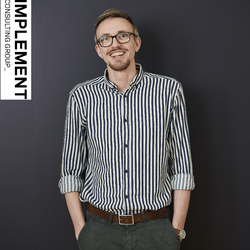
"The programme gave me the necessary theoretical knowledge to advice companies how to improve their Supply Chain Planning. Being introduced to the analytical tools made it possible for me to get a relevant student job and contribute to the real company. The quantitative and qualitative methods are well balanced, and the skills could be put into practice from day 1 in my first real job."
Mike Weisbjerg, Partner, Implement Consulting Group. 2015 Graduate
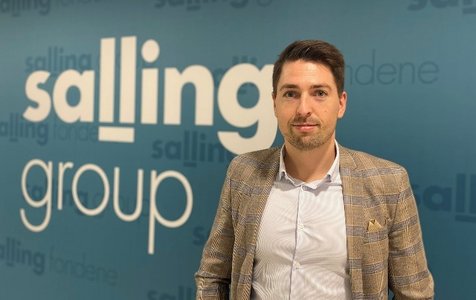
“I can talk both as a former student and as an employer of current and previous students, and I believe the OSCA programme gives the students a terrific foundation for their initial steps of their professional carrier. It is the pragmatic thinking of Operations and Supply Chains that benefits the students the most. It seems to be easier for the students to comprehend workflows and processes, which is, massively, important regardless of the carrier is being in Supply Chain, Management Consulting or Commercial Departments. That mixed with the skills and knowledge of Visual Basic, R, or other computing methods really gives the full package for the employers, when considering new bright talents.”
Carl Martin Munkholm, Supply Chain Manager, Salling Group, 2017 Graduate
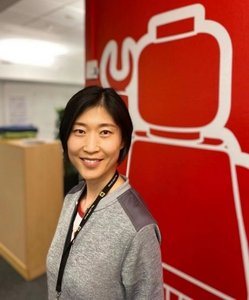
"The programme helped me to build a deep end-to-end understanding on supply chain, meanwhile, to be equipped with analytical mindset and a variety of handful tools. Joining the programme will give you the opportunity to influence and design supply chains under the future challenges: pandemic, sustainability, digitisation, etc."
Li Ma, Senior manager in Sales and Operations Planning, Lego, 2013 Graduate
A Master’s degree in Operations and Supply Chain Analytics opens the door to a wide range of job functions and industries. OSCA gives you a clear professional profile while also providing considerable freedom to shape your career. You may, for example, work with supply chain management, planning, procurement, production, data analytics, consulting or project management.
Supply chain-related positions represent the largest job category chosen by our graduates, but many also work in areas such as strategy and consulting, product and programme management, data and analytics, and technology. Graduates also work across a wide range of industries from manufacturing, retail and food to life science and IT.
OSCA therefore qualifies you to work with complex decisions concerning, for example, capacity, procurement, inventory, risk, service and sustainability, without limiting you to one particular career path.
To further support these career opportunities, the programme is closely connected to the business community through its Advisory Board. The Board provides strategic insight and guidance to ensure the programme remains aligned with industry needs and future trends. It actively contributes to discussions on curriculum development, the design and content of core courses, and the integration of emerging technologies such as generative AI. The Board also advises on desired graduate competencies, employer practices, and the implications of forthcoming graduate reforms. Get inspired by the career paths of the current members of the Advisory Board for Operations and Supply Chain Analytics.
The distribution of graduates working in the private and public sectors is as follows:
These are the typical job categories that our graduates work in.
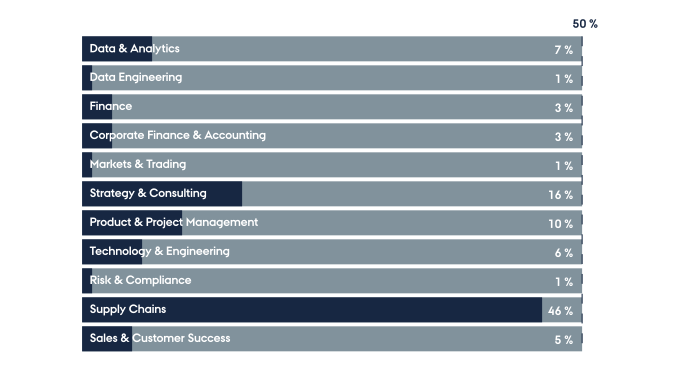
These are the typical industries that our graduates work in.
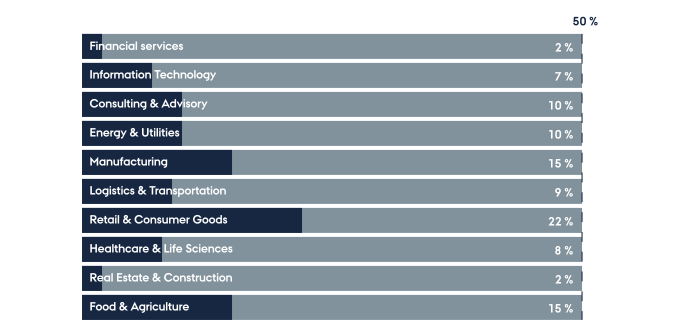
These analyses are based on Aarhus BSS graduates from 2015–2025 and were conducted in 2026. The information reflects the most recent job and industry identified at the time of the analysis. Data were gathered from publicly available sources and interpreted with the assistance of large language models. Although a sample of results was manually verified, the findings may involve incompleteness or classification uncertainty.
