Master's Degree Programme
| About the programme Language: English (See language requirements) | Place of study: Aarhus | Commencement: August / September and January / February |
The MSc programme in Biology provides you with the opportunity to specialise in one or more of the areas of biology that you find most interesting. Because all students begin with a basic knowledge of biology, the teaching is at a high level right from the start. The Department of Biology at Aarhus University is popular among students and researchers from abroad. It is an active and international research environment.
When you commence your MSc programme in Biology, you compose your own individual study plan in collaboration with a lecturer. The degree programme counts as 120 ECTS and consists of elective courses and a thesis. The considerable freedom of choice is an excellent opportunity for in-depth studies in one of the many disciplines within biology – such as genetics, evolution and ecology, ecophysiology, aquatic biology, microbiology, and ecosystem function and management.
The MSc thesis is often based on a major fieldwork and/or laboratory project. Under the supervision of a researcher, students are personally responsible for a project description as well as for preparing and completing their thesis. The practical element must be substantiated by theory and the project is placed in a wider context, so students will normally spend a full year working on their thesis. The thesis may be combined with fieldwork abroad, if this is deemed relevant for the project.
Teaching is carried out by researchers who are specialists in their subject and who keep up-to-date with the latest developments in their field.
For students on the programme, the door to your lecturer’s office is always open if you need clarification of the study material, and you are encouraged to ask questions at lectures and during exercises. The programme requires high-level academic skills and independent study, but in return, students gain considerable benefits in the form of academic challenge, practical competencies and scientific knowledge.
When you write your thesis, you become associated with a group of researchers where you participate in a journal club and attend guest lectures, in addition to taking part in academic discussions and dialogue.
Graduates from the Department of Biology find work in a wide range of dynamic fields, including research and development, administration, and consultancy, as well as teaching and communication. With a MSc in Biology from Aarhus University you will have excellent opportunities to continue your career with a PhD at a Danish or international university.

I had always dreamed of going to Europe, and I had heard that it was easy to get by with English in Scandinavia, so for me the choice was easy. I thought I would learn a lot here and I certainly did. At Aarhus University, I learned how to establish a research project from scratch by myself, and I learned to write scientific articles even though I’m still just at Master’s level.
Hanh Ngyuen
Graduate, MSc in Biology programme, from Vietnam
In this section you can learn more about the admission requirements relevant to the master's degree programme in Biology. Depending on your educational background and your qualifications, there are different ways to meet the admission requirements:
This section is relevant for you, if you have:
The two sections listed below are relevant only for students with a bachelor's degree from a Danish institution:
Below you will also be able to learn more about language requirements and find out whether or not this master's degree programme has a limited intake.
If you have an international educational background, you must meet both the general admission requirement and the specific admission requirements:
You must have a bachelor's degree or equivalent that is comparable to a Danish bachelor's degree in both level and duration (180 ECTS).
For more information about how your bachelor's degree is assessed, please see the national database.
If you meet the general admission requirement, the university will continue on to assess whether or not you meet the specific admission requirements.
You can be admitted to the master's programme if the university assesses that your education has a level, scope, and content that corresponds to the academic requirements specified below.
| Subject area | Number of ECTS |
Subject components in biology The following subject areas must be covered:
| 60 |
Fundamental subject components within mathematics, chemistry and statistics | 30 |
We cannot assess in advance whether your specific degree will meet the above requirements. Therefore, we recommend that you apply for the programme if you believe that you meet the academic requirements. In this regard, it is a good idea to compare your degree with the programmes that provide direct admission.
The following Bachelor's degree programme(s) from Aarhus University entitles you to an offer of admission to the Master's degree programme in Biology:
Please note that you must apply for admission to the Master's degree programme within three years of completing your Bachelor's degree programme.
Learn more about Legal right of admission.
Certain Bachelor's degree programmes from Aarhus University and various other Danish Universities have been determined to meet the admission requirements to this Master's degree programme in Biology:
This master's degree programme has a limited intake.
Because of the limited intake all qualified applicants will be prioritised according to a set of selection critieria (see below).
Meeting the admission requirements does not automatically ensure your offer of admission. Only if you have a specific bachelor's degree from Aarhus University with a so-called 'legal right of admission' will you be guarenteed an offer of admission to this master's degree programme.
If there are more qualified applicants than available student places, the selection will be based on the following criteria (each criterion counts for 1/3):
Grades from the qualifying degree
Grades achieved in relevant subject fields:
Life sciences
Mathematics
Chemistry
Statistics
Relevant subject fields (measured in ECTS). In this assessment, ECTS credits that are a part of the admission requirements described under ‘Other qualifying degrees’ are not included.
Life sciences
Mathematics
Chemistry
Statistics
In criterion three, the score is based on the proportion of subjects on the bachelor’s degree diploma that fall within the relevant subject fields. In this assessment, ECTS credits that are a part of the admission requirements described under ‘Other qualifying degrees’ are not included.
Please note that grades achieved after the application deadline are not included in the assessment.
In order to be admitted to this programme you must meet the university's english language requirements.
Students with bachelor's degree from Aarhus University with a so-called 'Legal right of admission' are exempt from the English language requirement.
Unfortunately, Aarhus University is not able to assess your qualifications beforehand. In order for your qualifications to be assessed you must apply for admission. To learn more, please go to Assessment of your qualifications.
The MSc programme in Biology offers courses within three major biological disciplines:
The programme offers a high degree of customization, allowing you to design your study plan entirely based on courses of your choosing, ideally in consultation with your instructors. This flexibility enables you to tailor your education to focus on the areas that interest you most. A minimum of 30 ECTS credits is required to be earned within the field of biology. Beyond this requirement, you have the opportunity to take courses offered in other disciplines, provided they contribute to the overall academic coherence of your programme.
Read more about the program structure, organization, and recommended course compositions.
If you would like information about a Master’s thesis in Biology working with research groups at the Department of Biology, you can find and contact the groups on the Department of Biology's website.
If you have the necessary skills and interest, you have the option of applying for admission to the PhD programme. You can apply when you have completed your Bachelor’s degree and one year of your Master’s degree or when you have completed your Master’s degree. In the PhD programme, you start working on a research project and are gradually trained through courses and personal guidance to become a researcher. For more information click here to read more about the PhD programme in Biology or read examples of current research projects at the Department of Biology.
At Aarhus University, you are in close contact with researchers in a way that you rarely experience at other universities. The door to the professor’s office is always open if you need clarification of the study material, and you are encouraged to ask questions at lectures and during exercises. We make heavy demands on your academic skills and independence. In return, you gain considerable benefits in the form of academic challenges and scientific knowledge, in addition to broad competences.
The teaching at the university is based on independence, critical thinking and collaboration. Part of the teaching is in the form of lectures that introduce new angles to the material compared with the textbooks. The theoretical and practical exercises take place in small groups where you work with relevant issues in depth. Most biology students also spend a certain amount of time on laboratory work or work related to field courses.
The varied forms of teaching, collaboration in groups and the opportunity for close scientific dialogue with the researchers provide you with general competences that are in great demand in the global job market. These competences include abstract, critical and independent thinking, analytical skills and strategic planning. You can use these skills in many contexts – even in jobs you didn’t know you were qualified for.
There is more to life as a Biology student at Aarhus University than subjects and lessons. The all-round, inspiring student life at the Department of Biology is centred at Biologiens Hus (the House of Biology), a small building with a hall, a reading room and group rooms, in which the students meet for academic and social activities. This venue houses collections of field literature and textbooks, and is the home of the department’s Student Committee, which keeps students informed about activities at the Department of Biology. In addition, a number of student organisations at the department organise academic activities, excursions, celebrations and social events. The different student committees at the university consist of students who meet to discuss issues relating to the degree programme. These organisations influence the academic content of the degree programmes, from department and centre level to the top management levels at the university.
Aarhus University is unique, especially because the buildings are grouped in one campus area close to the Aarhus city centre. The campus has many green areas and a beautiful park surrounding a small lake. Here you also find student accommodation and an underground system of corridors, which means that you don’t have to get your feet wet going from the canteen to your study area. There are also lecture theatres and a host of activities ranging from sports days to the regatta on the lake, interesting lectures, a film club, libraries and university celebrations. The campus ensures that you have easy access to the canteen, student counsellors, teachers, the bookshop, the Royal Danish Library, and the Friday bar.
The university is not all Aarhus has to offer. As the second-largest city in Denmark, Aarhus has numerous different cultural activities. The well-known Aarhus Festival is celebrated for a week at the beginning of September every year and the streets really come to life. During the rest of the year, you can visit different music venues and concert halls in the city or find entertainment at one of the many theatres in Aarhus. The city’s many museums include ARoS – the major international art museum, which is a spectacular place for visual experiences. If you have had enough of cultural activities, you can ride your bike to the beach in no time or go for walks in the Risskov woods or in the beautiful woods around Marselisborg. The forty thousand young students in Aarhus make up 17.5% of the population, which leaves its mark on city life. Aarhus is a young, dynamic city with plenty of opportunities.
-experienced, photographed and filmed by the students themselves.
With thousands of pictures #AUInternational, #AarhusUni gives insight into the everyday life as a student at AU; the parties, procrastination, exams and all the other ways you’ll spend your time at university.
The photos belong to the users, shared with #AUInternational and #AarhusUni.
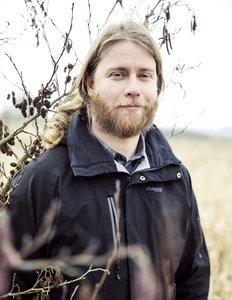
Hans Paarup Thomsen, MSc in Biology, senior advisor at Sweco
My time at the university was both really enjoyable and profitable.
The beginning of my biology study was characterised by the fact that I had little knowledge about nature - especially about nature in Denmark. Furthermore, I did not have any kind of network at the university.
Regarding the courses, the most important thing for me, was the opportunity to select a wide range of subjects within my fields of interest. It was not important for me to specialise within one subject area. Therefore, even though I was - and still am – a field biologist, I wrote my Master thesis within genetics. I had one specific subject about Danish flora and vegetation, which led me to my student job working with nature mapping and later on to my current job.
With a degree in Biology, I have acquired a broad knowledge of plants, animals, fungi, etc., and a comprehensive understanding of the interaction between biotic and abiotic conditions, such as soil, climate and natural habitats. That is, the fundamental knowledge of many of the topics I work with today.
Furthermore, the education has also enriched me with a broad network - both socially and professionally.
All the social activities at Biology were also of great value to me. Everything from the committed tutors welcoming you as a new student, Friday get-togethers, party associations, and academic committees. In addition to this, we had spontaneous field trips, shared meals at the department and many other fun activities arranged by students.
The people, I came to know through these experiences, are the people I call my network today.
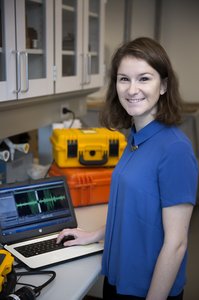
Ellen Rose Jacobs, MSc student in Biology at Aarhus University, BSc in Ecology, Behavior, and Evolution from University of California
I chose Aarhus University because of the faculty. The lab I'm studying in here is world-class in marine bioacoustics, so I came here to study with researchers at the forefront of their fields. I've worked in a number of bioacoustics labs, but the one here at Aarhus University is definitely among the best. I've followed their work in my previous studies so it's almost surreal to get to work directly with them.
Before coming here I'd heard about Denmark's flat hierarchical power structure, but when I arrived it was still a positive surprise! The staff and faculty are mostly laid-back in their interactions with students, which creates a low-pressure environment and makes it very comfortable to come to them with any problems. My professors have all been high up in the department, but they treat the students as equals. Ultimately, I feel respected by the staff, which makes my experience here infinitely better than it would be in a department with a strict power structure.
I'm really enjoying my Master's program here! The flexibility to study what I am interested in is fantastic. In a more strictly structured Master's program, I wouldn't be able to do extended field work in my first year, but here at Aarhus everything is accommodating enough that I can take advantage of all that the university has to offer. I'm getting real research experience and right from the start, which is incredibly valuable. I appreciate that nothing I do here is busy work. There is an emphasis on real-life application, so any lab exercises in my classes demonstrate valuable theories from our curriculum, and my independent projects are attempts at actual contributions to my field.
I would like to work in bioacoustics research when I graduate. I'm really excited about marine bioacoustics, and the longer I spend studying in the field, the more I like it and feel that it's what I want to spend my life doing.

The chart shows the five most common types of work for graduates 1-2 years after finishing their degree. The data is derived from a survey made by Epinion for the Ministry of Higher Education and Science and Aarhus University in 2020.
Aarhus University educates Biology graduates for the regional, national and international job markets. Graduates from the Department of Biology find work in many different fields and institutions. Most jobs are within research, administration and consultancy as well as teaching and communication in the private or public sectors.
Biologists are employed in positions within a wide range of biology areas ranging from biotechnology, nature and the environment to biological production within agriculture and the fishing industry. Many biologists also work as consultants or environmental officers within environmental administration and management.
If you have a burning desire to communicate about biology, you can choose to teach at upper secondary school or at laboratory technicians’ or teachers’ training colleges, or in connection with different forms of adult education. Finally, some biologists work with communicating biological knowledge in the media and publishing worlds or as nature consultants. A Biology degree is the key to many different types of jobs throughout society.