Master's Degree Programme for Working Professionals (4 years)
| About the programme Language: English (See language requirements) | Place of study: Aarhus | Commencement: August / September (See if this programme also offers a January/February start for international applicants). Programme type: Master's Degree Programme for Working Professionals (4 years) |
Are you fascinated by the diversity of life and the complexities of the natural world? The work-integrated master in Biology at Aarhus University offers in-depth and high-level understanding of the fundamental principles of nature – from the smallest molecular interactions to the dynamics of entire ecosystems.
A work-integrated master is designed for students who are employed while studying. You complete the programme alongside your job or entrepreneurial activities. The programme has a standard duration of four years.
The MSc in Biology builds on the department’s strong research expertise in:
The programme is highly flexible and research-oriented allowing you to tailor your MSc according to your specific interests. It creates a strong link between theory and practice, as you are able to apply your academic learning directly to relevant work tasks. You bring the latest academic knowledge into your workplace, while at the same time gaining valuable experience in applying this knowledge in practice.
You can pursue your passion for biodiversity or your curiosity for the complex ways with which living organisms function and interact with their environment. You can learn from world experts on species groups from across the tree of life and a range of ecosystems. While following your interests, you will gain expert knowledge and obtain the tools needed to address some of the most pressing challenges facing modern society relating to biodiversity loss, climate change and human health.
The programme provides you with a strong theoretical foundation and the possibility for extensive practical experience. Through research projects, laboratory work, and field trips you can work directly on a variety of problems such as nature restoration and conservation, how climate change impacts Arctic ecosystems, physiological mechanisms driving animal behaviour, the role of microorganisms in global element cycles – the list is long. You will also acquire analytical skills with broad value in the job market. These include analytical tools in bioacoustics, use and development of satellite- and drone-based remote sensing technologies, analytical genomics and bioinformatics, eDNA-analysis and advanced chemical sensors, to name but a few.
At Aarhus University, the Biology programme is known for its exceptionally active and welcoming student community, offering international students the ideal setting to thrive both academically and socially. With a strong emphasis on applying knowledge and developing innovative solutions, the programme is perfectly suited for the curious and ambitious student who is motivated by Biology’s key role in addressing global challenges.
Join the work-integrated master in Biology at Aarhus University – pursue your passions, discover new ones, and prepare for a career where you can make a difference.
The specific requirements regarding the number of working hours needed for admission to the programme are outlined under 'Admission requirements'.
In this section you can learn more about the admission requirements relevant to the work-integrated Master's degree programme in Biology. Depending on your educational background and your qualifications, there are different ways to meet the admission requirements:
This section is relevant for you, if you have:
The two sections listed below are relevant only for students with a bachelor's degree from a Danish institution:
Below these sections, you can learn more about the employment requirement and the English language requirement. You can also find out which ranking criteria we use to assess your application when prioritizing among the submitted applications.
If you have an international educational background, you must meet both the general admission requirement and the specific admission requirements:
You must have a bachelor's degree or equivalent that is comparable to a Danish bachelor's degree in both level and duration (180 ECTS).
For more information about how your bachelor's degree is assessed, please see the national database.
If you meet the general admission requirement, the university will continue on to assess whether or not you meet the specific admission requirements.
You can be admitted to the master's programme if the university assesses that your education has a level, scope, and content that corresponds to the academic requirements specified below.
| Subject area | Number of ECTS |
Subject components in Biology The following subject areas must be covered:
| 60 |
Subject components in Quantitative and Physical Sciences The following subject areas must be thoroughly covered:
The following areas may also be covered:
| 30 |
We cannot assess in advance whether your specific degree will meet the above requirements. Therefore, we recommend that you apply for the programme if you believe that you meet the academic requirements. In this regard, it is a good idea to compare your degree with the programmes that provide direct admission.
No Bachelor's degree programme(s) from Aarhus University entitles applicants to an offer of admission to this work-integrated Master's degree programme.
Certain Bachelor's degree programmes from Aarhus University and various other Danish Universities have been determined to meet the admission requirements to this work-integrated Master's degree programme in Biology:
If you hold a Bachelor’s degree from a non-Danish university, you must complete the appendix below and upload it to the application portal. The appendix helps the academic assessors with the assessment of your application.
Download appendix
When applying for a work-integrated Master’s degree programme, you must meet the requirement of being in relevant employment.
“Relevant employment” means that you work at least 25 hours per week in a public or private company, or as an entrepreneur, and that your work tasks are professionally related to both your qualifying education and the education you are applying for.
In order to be admitted to this programme you must meet the university's English language requirements.
Students with bachelor's degree from Aarhus University with a so-called 'Legal right of admission' are exempt from the English language requirement.
All Master’s degree programmes at Aarhus University have limited intake. This means that you are not guaranteed admission even if you meet the entry requirements. When we prioritize among applicants, we assess your application based on a set of fixed ranking criteria, which you can see below.
If you have a legal right of admission, you are guaranteed a place in the programme and do not need to consider the ranking criteria.
Ranking criteria:
Grades achieved in relevant subject fields:
Please note that grades achieved after the application deadline are not included in the grade point average (GPA).
In criterion three, the score is based on the proportion of subjects on the bachelor’s degree diploma that fall within the relevant subject fields. In this assessment, ECTS credits that are a part of the admission requirements described under ‘Other qualifying degrees’ are not included.
Please note that grades achieved after the application deadline are not included in the assessment.
Unfortunately, Aarhus University is not able to assess your qualifications beforehand. In order for your qualifications to be assessed you must apply for admission. To learn more, please go to Assessment of your qualifications.
The Master’s degree programme for working professionals is a part-time programme designed to fit around your job. Over four years, you will complete 120 ECTS credits – around 15 ECTS per semester.
You can choose from courses within three main areas of biology:
Your individual study plan in the work-integrated Master’s degree programme is arranged in collaboration with a lecturer and consists of courses you select from the course catalogue. This allows you to focus on the areas that particularly interest you and that are relevant to your professional field within your workplace.
You must complete at least 90 ECTS within the field of biology, including a Master’s thesis worth 30, 45 or 60 ECTS. You can also take courses from other subject areas, as long as your overall study plan remains academically coherent.
Your study plan can be organised to fit with your employment collaboration, as long as you comply with the study regulations concerning the maximum duration of study.
At Aarhus University, you are in close contact with researchers in a way that you rarely experience at other universities. The door to the professor’s office is always open if you need clarification of the study material, and you are encouraged to ask questions at lectures and during exercises. We make heavy demands on your academic skills and independence. In return, you gain considerable benefits in the form of academic challenges and scientific knowledge, in addition to broad competences.
The teaching at the university is based on independence, critical thinking and collaboration. Part of the teaching is in the form of lectures that introduce new angles to the material compared with the textbooks. The theoretical and practical exercises take place in small groups where you work with relevant issues in depth. Most biology students also spend a certain amount of time on laboratory work or work related to field courses.
The Department of Biology is located in the heart of the University Park. Here, you will attend classes, work on projects, receive supervision, and meet with your fellow students. You will also find Biologiens Hus – a much-used meeting place for biology students. The building offers quiet reading areas and group rooms and also a social area – the setting for the popular Friday Bar.
Biology is known for its active and inclusive study environment, with many student-run activities and associations – including the sports club GD Biobold, the social committee BIOGAS, and Kulten, which organises field trips. As an international student, you will therefore have excellent opportunities to settle in quickly and become part of the community.
Follow the student life at Aarhus University
-experienced, photographed and filmed by the students themselves.
With thousands of pictures #AUInternational, #AarhusUni gives insight into the everyday life as a student at AU; the parties, procrastination, exams and all the other ways you’ll spend your time at university.
The photos belong to the users, shared with #AUInternational and #AarhusUni.
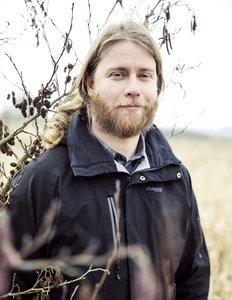
Hans Paarup Thomsen, MSc in Biology, senior advisor at Sweco
My time at the university was both really enjoyable and profitable.
The beginning of my biology study was characterised by the fact that I had little knowledge about nature - especially about nature in Denmark. Furthermore, I did not have any kind of network at the university.
Regarding the courses, the most important thing for me, was the opportunity to select a wide range of subjects within my fields of interest. It was not important for me to specialise within one subject area. Therefore, even though I was - and still am – a field biologist, I wrote my Master thesis within genetics. I had one specific subject about Danish flora and vegetation, which led me to my student job working with nature mapping and later on to my current job.
With a degree in Biology, I have acquired a broad knowledge of plants, animals, fungi, etc., and a comprehensive understanding of the interaction between biotic and abiotic conditions, such as soil, climate and natural habitats. That is, the fundamental knowledge of many of the topics I work with today.
Furthermore, the education has also enriched me with a broad network - both socially and professionally.
All the social activities at Biology were also of great value to me. Everything from the committed tutors welcoming you as a new student, Friday get-togethers, party associations, and academic committees. In addition to this, we had spontaneous field trips, shared meals at the department and many other fun activities arranged by students.
The people, I came to know through these experiences, are the people I call my network today.
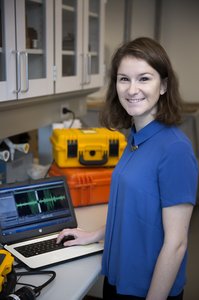
Ellen Rose Jacobs, MSc student in Biology at Aarhus University, BSc in Ecology, Behavior, and Evolution from University of California
I chose Aarhus University because of the faculty. The lab I'm studying in here is world-class in marine bioacoustics, so I came here to study with researchers at the forefront of their fields. I've worked in a number of bioacoustics labs, but the one here at Aarhus University is definitely among the best. I've followed their work in my previous studies so it's almost surreal to get to work directly with them.
Before coming here I'd heard about Denmark's flat hierarchical power structure, but when I arrived it was still a positive surprise! The staff and faculty are mostly laid-back in their interactions with students, which creates a low-pressure environment and makes it very comfortable to come to them with any problems. My professors have all been high up in the department, but they treat the students as equals. Ultimately, I feel respected by the staff, which makes my experience here infinitely better than it would be in a department with a strict power structure.
I'm really enjoying my Master's program here! The flexibility to study what I am interested in is fantastic. In a more strictly structured Master's program, I wouldn't be able to do extended field work in my first year, but here at Aarhus everything is accommodating enough that I can take advantage of all that the university has to offer. I'm getting real research experience and right from the start, which is incredibly valuable. I appreciate that nothing I do here is busy work. There is an emphasis on real-life application, so any lab exercises in my classes demonstrate valuable theories from our curriculum, and my independent projects are attempts at actual contributions to my field.
I would like to work in bioacoustics research when I graduate. I'm really excited about marine bioacoustics, and the longer I spend studying in the field, the more I like it and feel that it's what I want to spend my life doing.

The chart shows the five most common types of work for graduates 1-2 years after finishing their degree. The data is derived from a survey made by Epinion for the Ministry of Higher Education and Science and Aarhus University in 2020.
With a Master’s degree in Biology, you have the following competences:
Aarhus University educates Biology graduates for the regional, national and international job markets. Graduates from the Department of Biology find work in many different fields and institutions. Most jobs are within research, administration and consultancy as well as teaching and communication in the private or public sectors.
Biologists are employed in positions within a wide range of biology areas ranging from biotechnology, nature and the environment to biological production within agriculture and the fishing industry. Many biologists also work as consultants or environmental officers within environmental administration and management.
If you have a burning desire to communicate about biology, you can choose to teach at upper secondary school or at laboratory technicians’ or teachers’ training colleges, or in connection with different forms of adult education. Finally, some biologists work with communicating biological knowledge in the media and publishing worlds or as nature consultants. A Biology degree is the key to many different types of jobs throughout society.
With a Master’s degree programme for working professionals, you can build a network among companies and organisations that interest you while you are still studying. Your practical work experience will also prepare you well to make informed career choices once you have completed your degree.
If you have the necessary skills and interest, you have the option of applying for admission to the PhD programme. You can apply when you have completed your Bachelor’s degree and one year of your Master’s degree or when you have completed your Master’s degree. In the PhD programme, you start working on a research project and are gradually trained through courses and personal guidance to become a researcher. For more information click here to read more about the PhD programme in Biology.
