
Full-time Master’s Degree Programme (2 years)
| About the programme Language: English (See language requirements) | Place of study: Aarhus | Commencement: August / September (See if this programme also offers a January/February start for international applicants) | Programme type: Full-time Master’s Degree Programme (2 years) |
Physics is about understanding the laws of nature, from the behaviour of individual atoms to the evolution of galaxies. In the MSc in Physics at Aarhus University, you explore these questions directly through experiments, simulations, astronomical observations and theoretical modelling.
You might be...
Here, physics is experienced as a living research discipline, where curiosity, precision and creativity work together.
Teaching is closely integrated with ongoing research. Your lecturers are active scientists, and as a master’s student you become part of a research group where you work alongside PhD students and academic staff. Many students also carry out research at the ISA, Centre for Storage Ring Facilities, Aarhus University’s world-renowned synchrotron radiation facility, where experiments in atomic and molecular physics, surface and materials science, space science, and the spectroscopy of biological molecules are conducted.
Having facilities such as ASTRID2, the Mars Simulation Laboratory, and several specialised research centres located on or near campus provides a rare opportunity to move directly from coursework into front-line experimental environments. Students with an interest in astrophysics are similarly integrated into research that combines observational data, instrumentation, data analysis, and theoretical modelling of the Universe.
The programme is flexible and allows you to shape your own academic direction through your choice of courses, project work and thesis focus. Whether you want to investigate fundamental physical laws, design and conduct experiments, develop advanced computational methods, collaborate with the private sector through tailored research projects, or explore interdisciplinary applications, the MSc in Physics supports these paths.
In this section you can learn more about the admission requirements relevant to the master's degree programme in Physics. Depending on your educational background and your qualifications, there are different ways to meet the admission requirements:
This section is relevant for you, if you have:
The two sections listed below are relevant only for students with a bachelor's degree from a Danish institution:
Below these sections, you can learn more about the English language requirement. You can also find out which ranking criteria we use to assess your application when prioritizing among the submitted applications.
If you have an international educational background, you must meet both the general admission requirement and the specific admission requirements:
You must have a bachelor's degree or equivalent that is comparable to a Danish bachelor's degree in both level and duration (180 ECTS).
For more information about how your bachelor's degree is assessed, please see the national database.
If you meet the general admission requirement, the university will continue on to assess whether or not you meet the specific admission requirements.
You can be admitted to the master's programme if the university assesses that your education has a level, scope, and content that corresponds to the academic requirements specified below.
| Subject area | Number of ECTS |
Course elements within physics and astronomy The following subject areas should be covered:
| 60 |
| Course elements within mathematics and statistics | 30 |
| Total | 90 |
We cannot assess in advance whether your specific degree will meet the above requirements. Therefore, we recommend that you apply for the programme if you believe that you meet the academic requirements. In this regard, it is a good idea to compare your degree with the programmes that provide direct admission.
The following Bachelor's degree programme(s) from Aarhus University entitles you to an offer of admission to the Master's degree programme in Physics:
Please note that you must apply for admission to the Master's degree programme within three years of completing your Bachelor's degree programme.
Learn more about Legal right of admission.
Certain Bachelor's degree programmes from Aarhus University and various other Danish Universities have been determined to meet the admission requirements to this Master's degree programme in Physics:
All Master’s degree programmes at Aarhus University have limited intake. This means that you are not guaranteed admission even if you meet the entry requirements. When we prioritize among applicants, we assess your application based on a set of fixed ranking criteria, which you can see below.
If you have a legal right of admission, you are guaranteed a place in the programme and do not need to consider the ranking criteria.
Ranking criteria:
In criterion three, the score is based on the proportion of subjects on the bachelor’s degree diploma that fall within the relevant subject fields. In this assessment, ECTS credits that are a part of the admission requirements described under ‘Other qualifying degrees’ are not included.
Please note that grades achieved after the application deadline are not included in the assessment.
In order to be admitted to this programme you must meet the university's English language requirements.
Students with bachelor's degree from Aarhus University with a so-called 'Legal right of admission' are exempt from the English language requirement.
Unfortunately, Aarhus University is not able to assess your qualifications beforehand. In order for your qualifications to be assessed you must apply for admission. To learn more, please go to Assessment of your qualifications.
The MSc in Physics comprises 120 ECTS and is completed full-time over two years. You typically take 30 ECTS per semester, combining lectures, exercises, laboratory work, theoretical analysis and independent study. The programme must include at least 90 ECTS within physics, and the language of instruction is English. This structure gives you a strong foundation in advanced physics while allowing you to shape your own academic specialisation. You can explore the full range of courses in the Course Catalogue.
You complete at least 60 ECTS of courses (or more, depending on the size of your thesis). These include one selective compulsory course and a range of elective courses chosen in dialogue with academic staff, enabling you to develop a profile that reflects your interests and ambitions.
The selective compulsory course is chosen from one of the following:
The remaining ECTS are completed through your Master’s thesis, worth 30, 45, or 60 ECTS, depending on the depth and scope of your research focus. The thesis is conducted within a research group, where you participate in meetings, discussions and ongoing projects alongside other master’s students, PhD students and academic staff. The thesis is typically completed during the final year of the programme. For full details, see the academic regulations.
Your individual study plan ensures academic progression while giving room for exploration across theoretical, experimental, and computational approaches. You also have the opportunity to take on individual research projects or industry collaboration projects, allowing you to work closely with researchers or external partners in areas you are passionate about.
If your circumstances change during your studies, it is possible to transfer between the full-time MSc in Physics and the Flexible Work-integrated Master’s Degree Programme in Physics. Admission requirements to the flexible work-integrated Master's degree programme in Physics apply, see Academic Regulations. Transfers are arranged in dialogue with the department and typically take effect at the beginning of a new semester, ensuring continuity in your academic progress.
Students who wish to continue into research may apply for a PhD position either during the programme or after completing the Master’s thesis. For more information, see the Graduate School of Natural Sciences.
As a Master’s student in Physics at Aarhus University, you become part of a close-knit academic and social community. Much of your day-to-day life will take place at the Department of Physics and Astronomy, where students and researchers work side-by-side and where doors are often open for questions, discussions, and shared problem-solving.
When you write your Master’s thesis, you are typically assigned a workspace in your research group, sharing an office with fellow master’s students and PhD researchers. This creates a natural environment for collaboration, academic support, and friendships — a place where you can discuss ideas, compare results, and help each other move forward.
The department has an active student culture shaped by the students themselves. There are social and academic events throughout the year, including seminars, film nights, informal talks, and the popular Physic's Friday Bar (Fysisk Fredagsbar), which opens every Friday afternoon and is a natural gathering point for students across the programme (find their website here). Student-led activities such as the Physics Show (Fysikshow), science outreach events, study cafés, and astronomy observation nights also bring people together around shared curiosity and enthusiasm.
Life on campus is centred around the university park — green spaces, lakes, study cafés, libraries, and places to meet friends between lectures. Everything is within walking or biking distance, and the city centre is only minutes away. Aarhus is a vibrant, student-driven city with concerts, theatres, cafés, festivals, and easy access to beaches and forests. With thousands of students living here, the city feels young, lively, and easy to make your own.
-experienced, photographed and filmed by the students themselves.
With thousands of pictures #AUInternational, #AarhusUni gives insight into the everyday life as a student at AU; the parties, procrastination, exams and all the other ways you’ll spend your time at university.
The photos belong to the users, shared with #AUInternational and #AarhusUni.
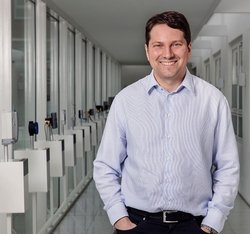
Mads Wraa Hyttel, M.Sc. in Physics, Aarhus University
When studying Physics at Aarhus University, I found the many different elective courses to be a great advantage – this gave me the possibility to choose courses matching my interests. I chose materials and laser physics – and I decided to specialise in experimental physics.
I carried out my Master's thesis in collaboration with Danish Technological Institute examining surface coatings for cutting tools. I produced the coatings at Danish Technological Institute and I analysed them at the university. I gained experiences about the development of new knowledge, which has been useful for me later on in my career.
In my job today, I work as product manager for all temperature sensor products at Kamstrup, where I draw on my knowledge from Physics – typically within thermodynamics, electromagnetism, mechanics, and materials science.
I have to quickly familiarise myself with complex technical issues and understand the consequences of a given change. This is something I have learned through the theoretical and experimental exercises in my Physics programme. I also have other tasks where my analytical approach and ability to learn new stuff come into use.

The chart shows the five most common types of work for graduates 1-2 years after finishing their degree. The data is derived from a survey made by Epinion for the Ministry of Higher Education and Science and Aarhus University in 2020.
A Master’s degree in Physics from Aarhus University prepares you for a broad range of careers in both research and industry. Through coursework, laboratory work, computational modelling, and your thesis project, you develop deep subject knowledge and strong analytical and problem-solving skills that are valued in many fields.
Many graduates continue into PhD programmes, either at Aarhus University or at research institutions in Denmark and abroad. Others move directly into roles in research and development, data analysis, software and modelling, medical physics, energy and climate technologies, quantum and photonics industries, and scientific consultancy. Physicists are sought after wherever complex problems need to be understood, modelled, and solved.
Whether you complete the MSc full-time or through the Flexible Work-Integrated Master’s Degree Programme in Physics, you earn the same degree (MSc in Physics) and have access to the same career and PhD opportunities. It is also possible to transfer between the two programmes during your studies, normally at the beginning of a new semester, if your circumstances or priorities change.
Graduates from the MSc in Physics typically develop the following competences:
These abilities form a foundation for a career in research, technology, innovation, and many areas where analytical thinking and scientific insight are essential.
